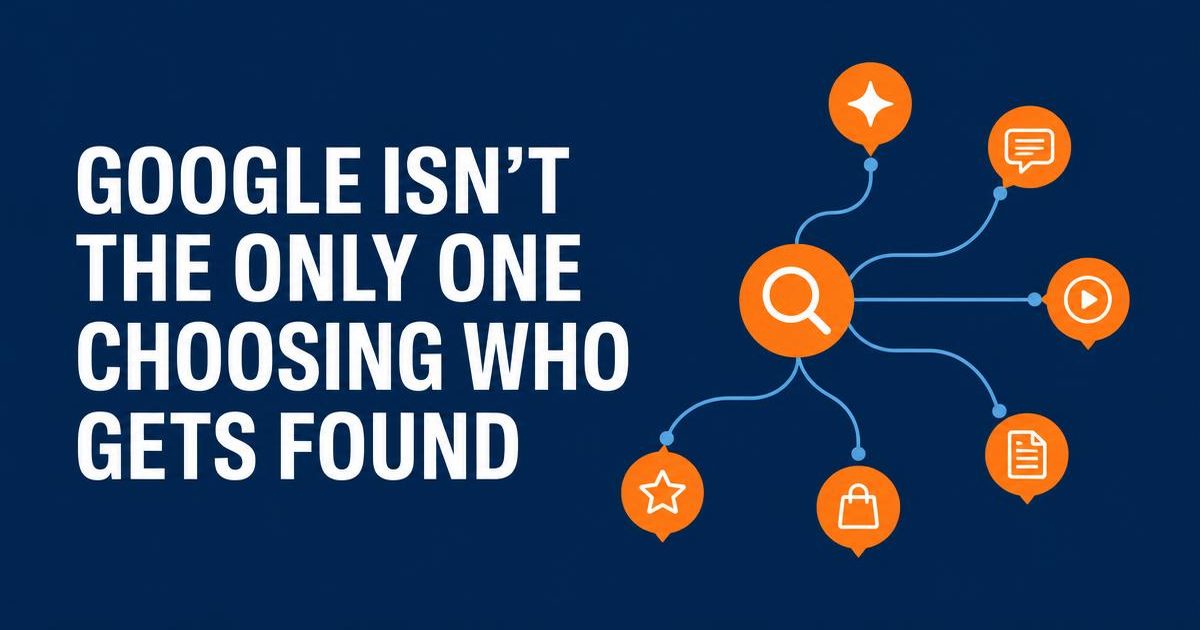
There are now at least four labels floating around for the same emerging discipline: GEO, AEO, Ai SEO, Ai search optimization. If you own a business rather than a marketing department, that is genuinely confusing — and the confusion is not your fault. The terminology is still being invented while the behavior it describes is already changing how customers find you.
So let us set the acronyms aside for a moment and state the practical question underneath all of them: when someone asks an Ai system for a business like yours, does that system understand your business well enough, and trust it enough, to recommend you by name?
The terms, briefly and honestly
- GEO — Generative Engine Optimization. Making your business clear, consistent and credible enough that a generative Ai system can confidently describe and recommend it.
- AEO — Answer Engine Optimization. The same idea framed around questions: being the business or source that gets used when a system answers a specific question.
- Ai SEO / Ai search optimization. Broader everyday shorthand, usually meaning “all the work that helps Ai-driven results include us.”
Anyone who tells you these definitions are settled is overselling. They overlap, vendors use them differently, and the labels will probably consolidate over the next few years. What is not vague is the underlying shift: a growing share of buying questions now get answered for the customer instead of handed to them as a list of ten links.
Why an Ai answer is a harder room to get into
A traditional results page is generous. It gives ten links and lets the customer decide. Being sixth is not fatal — you are still on the page, still clickable, still in the running.
An Ai answer is not generous. Ask for the best company like yours in your area and you get a short paragraph with two or three names in it. There is no page two, no scrolling, no near-miss. You are in the answer or you are absent — and the customer usually never learns you existed.
That is why we treat this as a visibility problem worth measuring rather than a trend worth reading about. If you have never seen what these systems currently say when asked about your category, you are guessing about the single moment a stranger decides who to call.
What an Ai system is really doing: deciding whether to vouch for you
It helps to stop imagining an algorithm and start imagining a cautious researcher. Someone asks them for a good local business in your category. They will not recommend a stranger on a hunch — their credibility is on the line — so they look for corroboration: does this business clearly say what it does and where, does its information agree with itself everywhere, do other people independently say good things about it, and does it look active right now?
If those answers come easily, recommending you is low risk. If they do not, the safe move is to name the business that is easier to verify. That is usually what happened when an Ai system named three competitors and skipped a twenty-year-old company with excellent work and a quiet digital footprint.
GEO does not replace SEO. It sits on top of it.
This is the most common misunderstanding we hear, and it costs businesses real money in both directions — either abandoning fundamentals that still work, or dismissing Ai visibility as hype.
Ai systems do not have private knowledge of your business. They read the same public web everyone else does. Which means the corroborating signals that always mattered still matter:
- Your website. Reachable, readable, and plainly stating what you do, for whom, and where.
- Your Google Business Profile. Complete, correctly categorized, current, and consistent with your site.
- Reviews. Recent, specific, steady over time, and responded to.
- Citations and listings. Your name, contact details and service area agreeing across the web instead of contradicting each other.
- Useful content. Pages that answer the questions customers actually ask before buying — timelines, cost ranges, what happens if something goes wrong, whether you handle their situation.
- Consistency. One version of the truth about your business, everywhere.
- Recency. Evidence that the business is active this year, not archived.
- Authority. Independent mentions, coverage and references that are not you talking about yourself.
Nothing on that list is new. What is new is the consequence of neglecting it. Ten years ago thin, inconsistent signals meant ranking lower. Today they can mean being left out of the answer entirely.
Where this fits in Be Found. Be Chosen. Be Valued.
GEO is not a separate discipline bolted onto a marketing plan. It is the current form of the first job.
Be Found is whether you turn up at all when someone is looking — which now includes turning up inside an Ai answer. Be Chosen is whether the evidence about you makes you the obvious pick once you are in the conversation; that is largely reputation and reviews, which is also what makes an Ai system willing to name you. Be Valued is what happens after the sale — and it quietly produces the raw material for the other two, because retained customers are where recent reviews, referrals and repeat business come from.
Read that way, GEO is not a new thing to chase. It is a new reason the same connected system matters, which is the point we make in Putting Strategy Before Tactics.
What we would do first, in your position
Before buying anything or rewriting your website, find out what these systems currently say. Ask ChatGPT, Google and Perplexity the questions your customers would actually ask — not your company name, but the need: the kind of business, the city, the situation. Read the answers as evidence, not as a verdict.
Most owners learn two useful things immediately: which competitors get named repeatedly, and which basic facts about their own business the Ai gets wrong or cannot find. That is a to-do list, not a scoreboard — and it is usually shorter and more fixable than people expect.
If you would rather not run that experiment by hand, that is exactly what our audit does, systematically and with a person reading the results. Either route is fine. What we would not do is keep guessing.
Frequently asked questions
- What does GEO stand for?
- GEO stands for Generative Engine Optimization — the practice of making a business clear, consistent and credible enough that generative Ai systems can confidently describe and recommend it.
- Is GEO the same as Ai SEO?
- In everyday use, yes. “AI SEO” and “AI search optimization” are looser labels for the same goal: being understood and recommended by Ai-generated answers. The terminology is still developing, and different people use these terms slightly differently.
- What is AEO?
- AEO stands for Answer Engine Optimization. It emphasizes being the source that gets used when a system answers a specific question, rather than appearing in a list of links. In practice AEO and GEO overlap heavily.
- Does GEO replace SEO?
- No. Ai systems still rely on the web they read: your website, your Google Business Profile, reviews, citations and independent mentions. Sound, crawlable, accurate SEO fundamentals feed GEO. SEO is necessary but no longer sufficient.
- Does GEO matter for local businesses?
- It matters most for local businesses, because local questions ask for a short list of names rather than a page of links. If an Ai assistant cannot confidently place and describe your business, you are simply not in the answer.
- How do reviews affect Ai recommendations?
- Reviews are independent, public language about what it is like to do business with you. Volume matters, but so do recency, consistency over time, the specifics customers mention and whether you respond — all of which make a recommendation easier to justify.